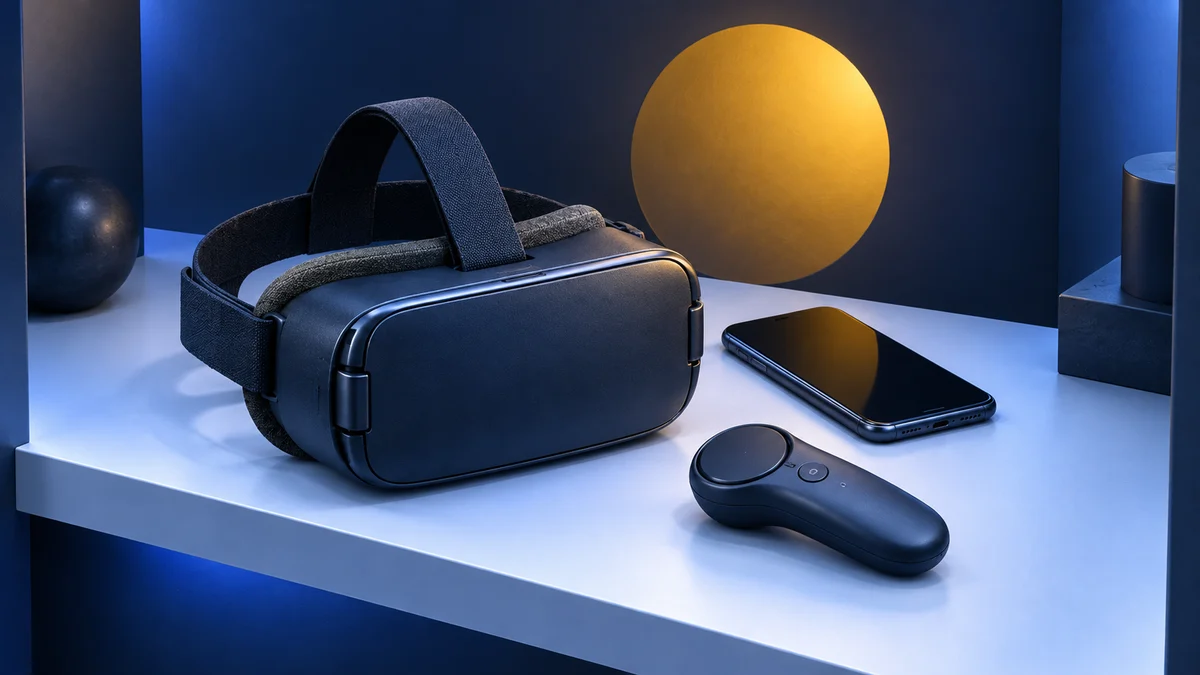
Google Daydream vs. Samsung Gear VR Comparison (Both Discontinued)
We may earn a commission when you buy through links on this page. As an Amazon Associate I earn from qualifying purchases. How this works
Dustin preferred Gear VR in the original 2020 review for its build, controller and software. Today, both platforms are discontinued: Daydream lacks support on newer Android versions, and Gear VR depends on older compatible Samsung phones and a problematic account setup for new users. An already working kit may still have limited uses. For a first VR purchase, see a standalone headset or basic Cardboard viewer.
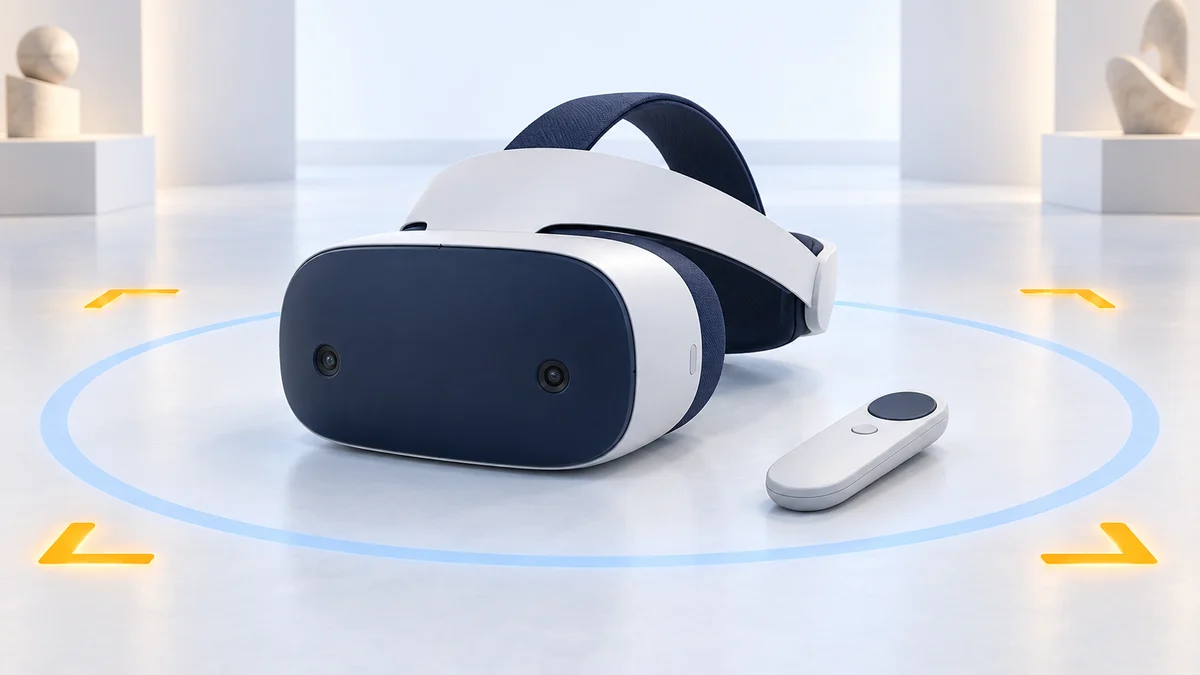
Headset alternatives discussed in this guide

Meta Quest 3S
128 GB configuration
Standalone VRStandalone games with Fresnel lenses.
Check first: Check the app library, optical fit and return policy.
Check price on Amazon Paid link · Amazon
Meta Quest 3
512 GB configuration
Pancake opticsPancake lenses and a higher-resolution display than Quest 3S.
Check first: Compare the complete purchase, including any accessories.
Check price on Amazon Paid link · AmazonA Google Daydream View or Samsung Gear VR needs the right phone as well as working VR software. Phone fit alone is no longer enough: both platforms are discontinued, and newer phones or operating systems can block the original setup. That makes either a poor starting point for a new user.
Check the platform status, then compare phone and controller requirements and software. Dustin's original experience remains below. See the alternatives if you're choosing your first VR setup.
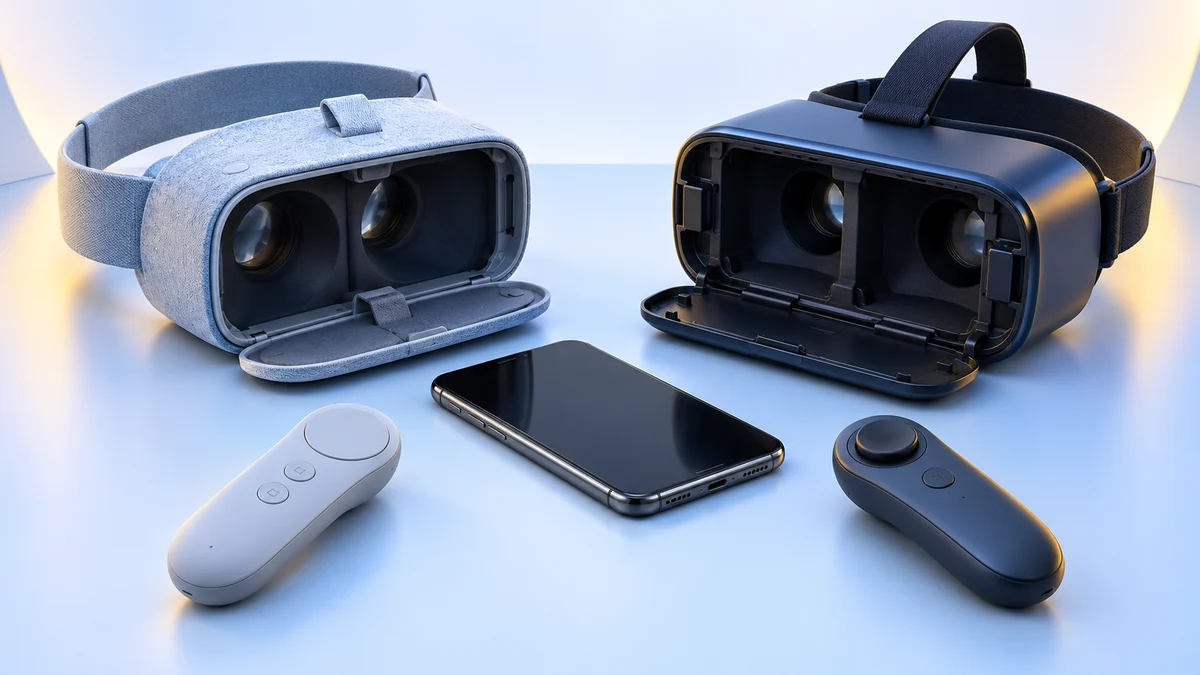
Daydream and Gear VR status
Platform status and source notes
Google Daydream vs. Samsung Gear VR: both discontinued
Still sold? No. Google delisted the Daydream View from the Google Store on 15 October 2019, and the Pixel 4 launched without Daydream support. Samsung left Gear VR support out of the Galaxy Note10 in 2019, and by 2020 Samsung itself said Gear VR was no longer available. Any listing now is old or second-hand stock.
Still usable? Barely. In October 2020 Google confirmed it had dropped Daydream support with Android 11, so it may not work on phones running Android 11 or later. Oculus stopped Gear VR software updates on 31 March 2020, and the Gear VR Codex fan site reports that since Oculus accounts were shut down in January 2023, new users can't sign in through the normal route.
What to consider instead: a standalone headset such as the Meta Quest 3S, or Google Cardboard if you only want to try phone VR for next to nothing. See What to buy instead. Checked 24 September 2026.
From Dustin Jermalowicz’s original 2020 review: I compared Google’s Daydream with Samsung’s Gear VR as phone-based VR options. My original choice was the Gear VR.
Things to Consider Before Buying a Mobile VR Headset
Phone-based VR uses the phone’s screen and processor. That makes phone compatibility, operating-system support and app access the first checks, before lenses or build quality.
| Requirement | Google Daydream View | Samsung Gear VR |
|---|---|---|
| Phone | A Daydream-ready Android phone | A compatible older Galaxy or Note phone; compatibility varies by headset version |
| Software constraint | Daydream support ended; Android 11 or later may not work | Updates ended in March 2020; new users face account sign-in problems |
| Included controller | Daydream motion pointer | Included with SM-R324 and SM-R325; check older-kit contents |
| Fit check | Confirm the phone was certified for Daydream | Confirm the exact phone, connector and any required adapter |
| New-user decision | Unsupported platform | Unsupported platform |
The original buying criteria below explain how Dustin compared the headsets in 2020. Physical fit and an attractive used price cannot establish whether their software still works.
Budget
Count the phone, headset and any missing controller or adapter together. For these discontinued platforms, an inexpensive viewer has little value if its apps or account setup fail. Compare a basic Cardboard viewer or standalone headset before buying a legacy kit.
Screen Size
Physical size is only one compatibility check. Daydream needs a Daydream-ready phone; Gear VR needs a supported Samsung model and the correct connector or adapter. Confirm the exact phone and headset version together, then check the operating-system limitation.
Expectations
These headsets were designed around phone VR, with a motion pointer for menus and compatible games. The original game-library comparison below describes what Dustin could use at the time. It does not guarantee that a new user can download or launch those apps now.
Presenting Google Daydream and Samsung Gear VR
Google’s Daydream VR headset and the Samsung Gear VR were the two phone VR headsets Dustin compared in the original review. Their build and comfort observations remain useful historical context, but phone and software compatibility decide whether a kit can work now.
Daydream
Google’s Daydream launched in late 2016 and is the company’s first true foray into VR (if you don’t consider the cardboard cutout headsets). The device has an attractive fabric design and includes a controller to help navigate your virtual environment.
The headset can be used with a variety of different Android devices, with some brands listed as being “Daydream ready”.
Specs:
- Field of view: about 100 degrees on the 2017 model, as commonly quoted (Road to VR reported it as around 10 degrees wider than the 2016 model)
- Dimensions: 6.6 in. x 4.6 in. x 3.9 in. (2017 model, according to Wikipedia)
- Controller included
- Requires a Daydream-ready Android phone
- Launch price: $79 (2016 model), $99 (2017 model), according to Wikipedia
- Status: discontinued in October 2019; not supported on Android 11 or later
Samsung Gear VR
Samsung worked with VR pioneers Oculus to develop the Gear VR headset. The headset is sturdy and well-built and works to integrate the Oculus ecosystem within your smartphone.
The device does require you to have a compatible Samsung Galaxy or Note phone, but the experiences provided are generally much higher than you get with other mobile headsets.
- Field of view: 96 degrees on the early models, 101 degrees from the SM-R323 onwards, according to Wikipedia
- Weight: about 345 grams without a phone; weight with the phone will vary
- Controller included with the SM-R324 and SM-R325 models
- Requires a compatible Galaxy phone: the S6 to S10 series, Note5, Note8, Note9 (with an adapter) or A8 (not the Note10 or anything newer)
- Status: discontinued; Oculus software updates ended in March 2020
How Daydream vs. Gear VR Match-Up
In the original 2020 review, I owned both devices and had used them extensively. The following categories preserve my experience and the reasons I gave Gear VR the edge. They describe that original comparison, rather than current software availability.
Build Quality
The build quality of both the Daydream and Gear VR are good. Google clearly went with a lightweight approach to try and make the headset comfortable to wear for long periods of time. The fabric look and feel reminds me of a comfortable hoodie material, and the device vents surprisingly well.
The Gear VR is a traditional plastic setup, but it feels sturdy. It’s considerably heavier than the Daydream, but the head strap is much better. The over the top band helps distribute weight better, and it actually makes the device less front-heavy.
While both of these headsets do a good job, I have to give the Gear VR the edge in this category.
Edge: Gear VR
Visual Quality
You may think that your phone will provide all of the visual aspects of your VR experience, but the headset does have a role. The field of view determines how much of the world you see at once, while the quality of the lenses will also dictate how crisp some of the images appear.
On paper the two are close: the Daydream is usually quoted at around 100 degrees, while the Gear VR’s field of view is 96 degrees on the early models and 101 degrees on the later ones, so the controller-equipped versions compared here are effectively level. I do think that the lenses on the Gear VR are a bit better, but once again, the difference is very small.
A large portion of those visuals will be the screen quality on your phones. The Daydream supported phones like the Pixel 3, which has a stunning display (though Daydream may not work once the phone is on Android 11 or later). Similarly, the Gear VR has support for Galaxy and Note devices, which have resolutions up to 1440 x 2960. These resolutions up the ante, and make the content look great.
Edge: Tie
Controller
Both devices come with a controller to help you navigate menus and apps. They function similarly, working more as a mouse than a gaming controller. I did find that the tracking and accuracy of the Gear VR controller was better, and I think the battery life is a bit superior as well.
I will also point out that you can sync Bluetooth gaming controllers to both headsets. This becomes a big benefit when playing certain games that allow you to steer or navigate cars or ships. If you’re looking to play games, I’d certainly recommend looking into buying an Xbox One Controller or something similar.
Edge: Gear VR
Software
Google and Samsung have both developed ecosystems for users to buy and load apps from within the headset. Both are usable and easy to navigate, but once again, I have to give the edge here to Gear VR.
The Oculus OS loaded into the headset is about the same standard you get with the Rift, Go, and Quest, and the familiarity and functionality is something that the Daydream cannot beat. It’s so easy to navigate between your library of apps, social functions, and store that nearly anyone can do it.
In the original comparison, I found Daydream’s software behind Gear VR’s. Google later stopped supporting the platform, as the note below explains.
Note: Neither store is maintained any more. Oculus ended Gear VR software updates in March 2020, removed Oculus Video and Oculus 360 Photos from download and froze the Oculus Browser; from September 2020 developers could no longer add Gear VR support to new store apps, according to UploadVR. Google stopped updating Daydream and, according to GSMArena, only some third-party VR apps remain on the Play Store. Oculus is now Meta, and its current headsets no longer share a platform with Gear VR.
Edge: Gear VR
Overall Value
When you look at the Daydream and Gear VR, you’ll notice that they’re priced similarly.
You get similar controllers, and the out-of-the-box functionality is comparable. Still, the better OS and experiences that are tailored for Gear reign supreme here, and end up giving you a better bang for your buck.
Edge: Gear VR
What to buy instead
Both headsets depend on phones and software that are no longer supported, so neither is worth buying now. The closest modern equivalent is a standalone headset, which has its own screen, processor and tracked controllers. As of 24 September 2026, Meta’s comparison page lists the Meta Quest 3S from $349.99 and the Meta Quest 3 (512GB) at $599.99. Our Meta Quest 3 vs Quest 3S comparison covers the differences.
If you only want to try phone-based VR cheaply, Google Cardboard still has a Google app and developer SDKs, and third-party Cardboard viewers are widely available.
Conclusion
Original 2020 verdict: Dustin preferred Gear VR when both platforms were supported. Neither is recommended for a new user today; the replacement section above explains the alternatives.
In that original comparison, I preferred the Gear VR for its build, controller and software.
I have nothing but love for the headset and have owned a few versions of them over the years. Don’t get me wrong: the Daydream is a very good headset, but it’s like driving a Mercedes, whereas the Gear VR is like having a Bugatti.
At the time, I preferred Daydream for a compatible non-Samsung phone, and Gear VR for a compatible Galaxy or Note. That historical recommendation does not apply to unsupported software or newer phones.
Update: That verdict still stands as a comparison, but both headsets are now discontinued and largely unusable on current phones. The Amazon links below are kept for reference only; check the listing carefully, and see What to buy instead for current options.
Historical listings for reference: Gear VR here, and Daydream View here.
Research behind this guide
Check the linked specifications and support documents, or read how we research. Original review experience stays attributed to its author.
View 11 sources
- 9to5Google: Google Daydream View is no longer available from the Google Store
- GSMArena: Google drops Daydream VR support with Android 11
- UploadVR: Oculus ends Samsung Gear VR updates
- Engadget: Samsung is killing its VR applications now that Gear VR is dead
- The Gear VR Codex (fan site): Meta killed the Gear VR
- Wikipedia: Samsung Gear VR
- Wikipedia: Google Daydream
- Road to VR: New Google Daydream brings improved comfort and field of view
- Engadget: Samsung is offering free Gear VR adapters to Note 9 owners
- Google: Cardboard
- Meta: Compare Meta Quest headsets
Explore the related guides in VR comparisons.