Homido V2 Virtual Reality Headset Review
We may earn a commission when you buy through links on this page. As an Amazon Associate I earn from qualifying purchases. How this works
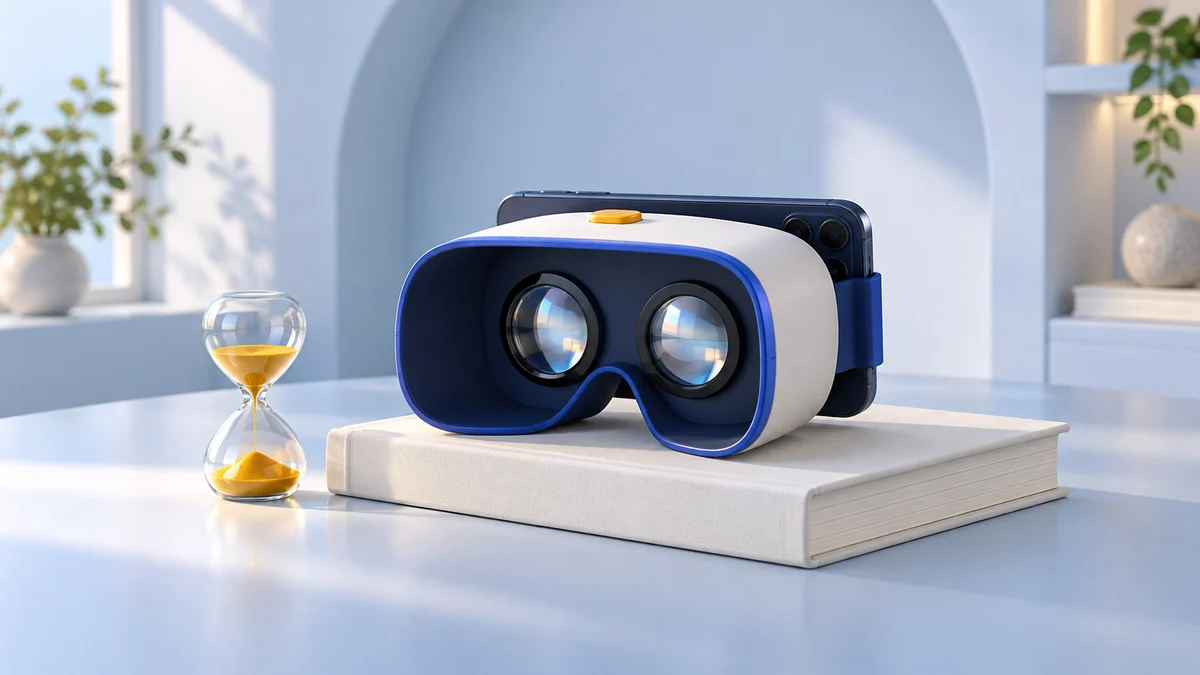
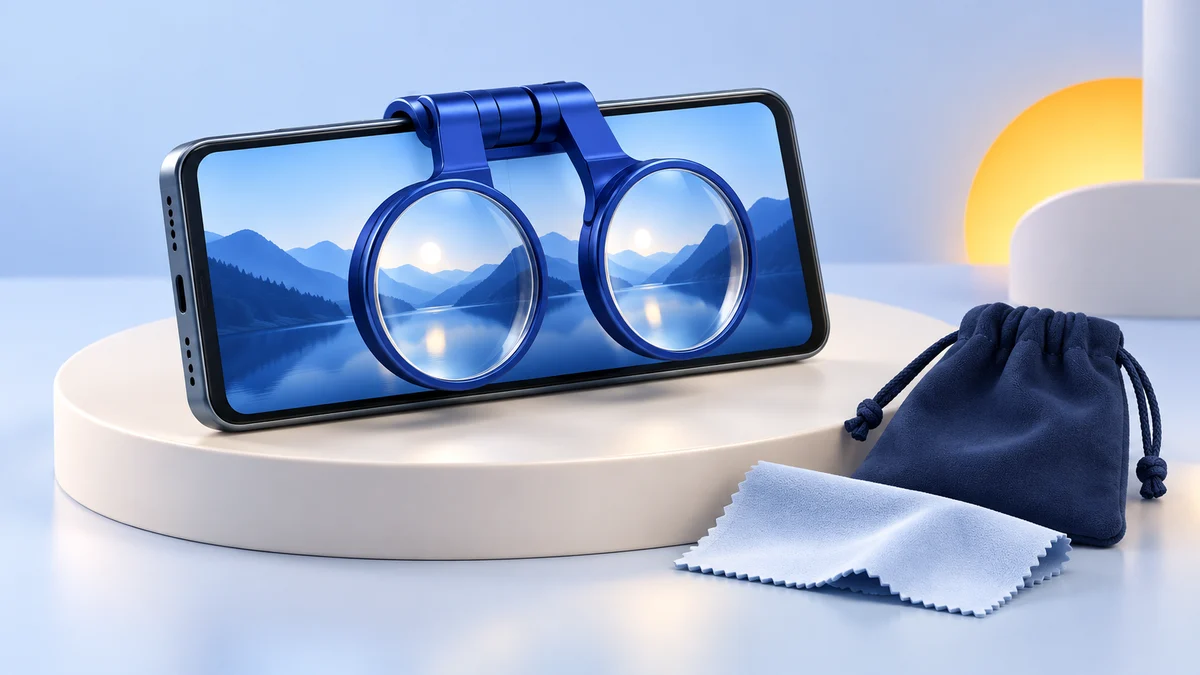
The Homido V2 is worth considering for hands-free phone VR if your phone fits its 4.5–6.5-inch range and has a gyroscope and accelerometer. It relies on your phone for video, sound and head rotation. Check the apps you want first. For walking around virtual spaces or using tracked controllers, compare standalone headsets instead of the original discontinued alternatives.
Headset alternatives discussed in this guide

Meta Quest 3S
128 GB configuration
Standalone VRStandalone games with Fresnel lenses.
Check first: Check the app library, optical fit and return policy.
Check price on Amazon Paid link · Amazon
Meta Quest 3
512 GB configuration
Pancake opticsPancake lenses and a higher-resolution display than Quest 3S.
Check first: Compare the complete purchase, including any accessories.
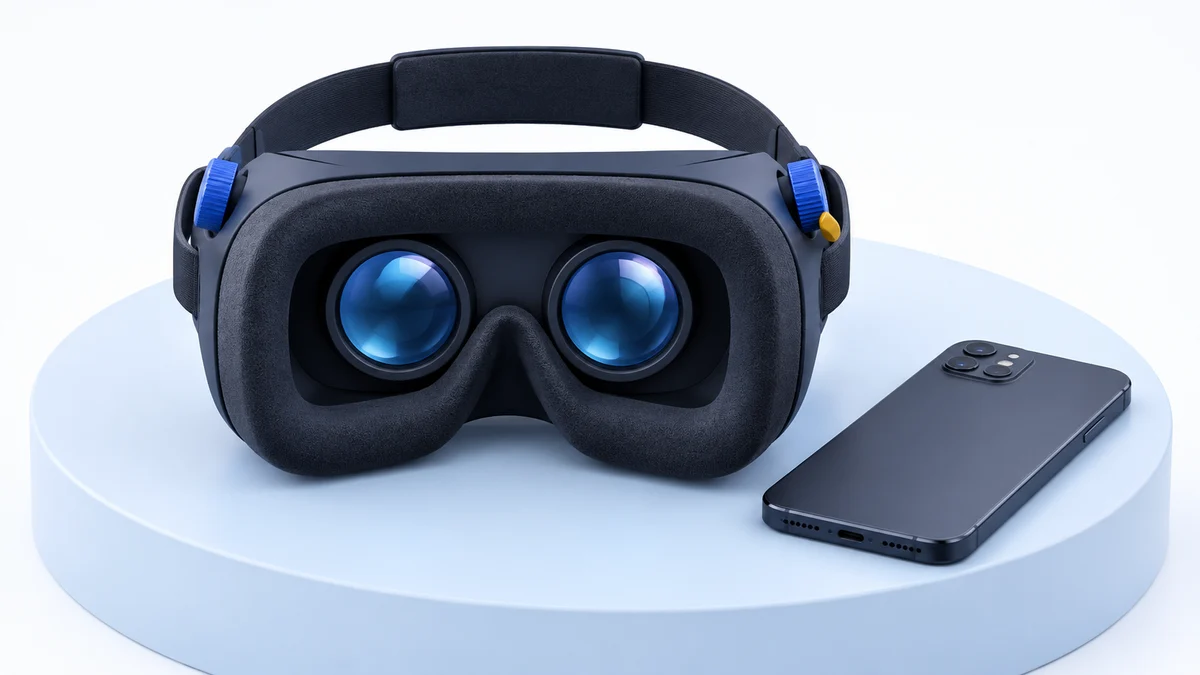
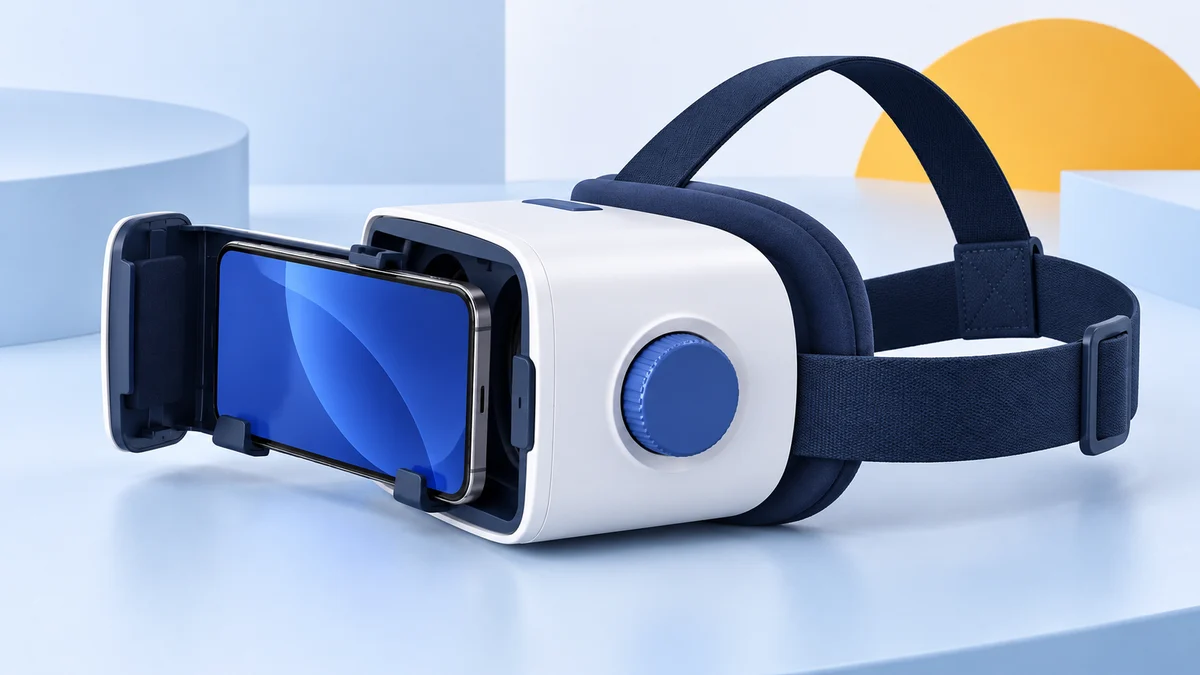
Check price on Amazon Paid link · AmazonThe Homido V2 holds your phone in a headset with adjustable lenses and a head strap. Your phone still supplies the screen, apps and head tracking. Before buying, check that your handset fits and that the videos or games you want remain available.
This review covers phone compatibility, design, visuals, audio and gaming. Brandon’s original experience follows the status notes, with the original comparisons clearly separated from the later buying advice.
Product status and source notes
Still sold: yes. Homido's e-shop lists the V2 at €49.99 and in stock (checked 24 September 2026), alongside the Mini, Grab and Prime on Homido's website.
Still usable: yes, with limits. According to Homido's product page, the V2 fits Android and iOS phones from 4.5 to 6.5 inches that have an accelerometer and gyroscope, so some of today's largest phones will not fit. It is Google Cardboard compatible, but Google open-sourced Cardboard in 2019 as interest declined, stopped selling its own Cardboard viewers in March 2021, and Cardboard now lives on as an open-source SDK. The three headsets this review originally compared it with (Oculus Rift, PlayStation VR and HTC Vive) have all been replaced by newer models.
What to consider instead: for another phone headset, see our best VR headsets under $50. For real VR games and apps, a standalone headset such as the Meta Quest 3S (from $349.99 in the US since 19 April 2026, per Meta) is a much bigger step up. Checked 24 September 2026.
Original review: The first-person observations below are Brandon Gates’s review published in 2020. Later status notes and the “What to buy instead” section provide the subsequent research context.
Over the years, I was fascinated at how virtual reality changed around us.
The introduction of 3D glasses in movie theatres and then VR headsets made me wonder how fast technology evolved. I always wanted a VR headset but couldn’t afford one honestly.
However, I recently came across the VR Headset Homido V2, and it has been a game changer for me.
Things to consider before buying VR headsets
You may already have butterflies in your stomach whenever you think of buying a VR headset, but there are a few things to consider before you invest.
Here is a quick guide that you can follow:
Compatibility with existing devices
You need to use the VR headset with a PC, a games console or a mobile phone.
So, as a thumb rule, always check if these existing devices support VR. You can go through the features of these items, and check their minimum requirements. If they meet the needs of the VR, you can buy a headset without a doubt in your mind. It will be wise to determine the device you will primarily use with the VR headset.
For example, if you want to use it for your phone, make sure your phone supports VR technology.
Tethered or mobile headsets?
Once you decide your primary device, you can choose from the tethered or mobile headsets. Tethered headsets are usually connected to gaming consoles or PCs.
They are more expensive than mobile variants because they come with motion sensors, display screens, and lenses. Mobile headsets, on the other hand, are lightweight and inexpensive. You can fit your phone inside the headset, and enjoy hours of VR experience.
Note: today there is a third option, standalone headsets such as the Meta Quest line, which have their own displays, processors and tracking and need neither a PC nor a phone.
Field of view
Field of view is the picture size that you see once you put the VR headset on. Ideally, you should choose a headset offering a wide field of view for a better viewing experience.
A narrow field of view makes you feel like watching through a diving mask.
The VR Headset Homido V2
The first word that came to my mind after unboxing the VR Headset Homido V2 is “Wow.”
This VR headset is everything that I dreamed so far, and more. It comes with a set of lenses that provide crystal clear picture quality.
The 100˚ field of view simply blew me away. Its immersive feeling makes me feel like I’m in the movie that is playing on my mobile.
Moreover, I can adjust the focal length using a wheel. So, if I want the picture slightly away from my eyes, I can change its distance in a flash.
With a 3-way headstrap and comfortable facepad, this VR headset is my best friend now. It goes wherever I go.
Pros
- Compatible with most Android and iOS smartphones from 4.5 to 6.5 inches (per Homido), though some current phones are larger than that.
- The single user allows you to take the phone out to attend a call.
- Both kids and adults can use this VR headset as it comes with adjustable optics.
- The headstraps hold the headset and your phone firmly for better viewing.
- Head tracking uses your phone’s own gyroscope and accelerometer, which suits 360° video and simple games.
Cons
- It only tracks head rotation (through the phone), not positional movement, and has no motion controllers.
- You will have trouble wearing the headset with your specs on.
- The bridge of the nose may seem heavy after wearing it for hours.
View the listing on AmazonPaid link · Historical or unverified listing
Features & Benefits
The VR Headset Homido V2 comes with uncountable features. I was overwhelmed with what I saw.
Here are some of the key features that make this model one of the best in its price range:
Design and weight
I was searching for a lightweight VR headset, and the VR Headset Homido V2 met my demands successfully.
The second interesting feature of this headset is how it sits. I’m particularly happy with this because it fits on my head securely. Even if I shake my head, the straps don’t slide off, or the phone doesn’t move from its position.
Correction: the weight and dimensions this review originally listed (15 pounds and 21.1 by 21.5 by 16.7 inches) were wrong. Homido does not list a weight on its product pages, and your phone adds to whatever the headset weighs.
Visual performance
When I think of the VR technology, it reminds me of my first experience in a 3D movie theatre. It was a visual spectacle for me. If you too are looking for something similar, the VR Headset Homido V2 will not disappoint. The headset comes with multiple smart applications that can enhance your visual experience.
Most importantly, you can watch 3D films with a side-by-side format. I sometimes felt that the objects were coming right at me. So, I adjusted the distance between the lenses using the slider in the bottom. One small niggle with this headset is it doesn’t suit people wearing glasses. My younger brother was so upset because he was having trouble adjusting his glasses and the headset.
According to Homido, the V2 has an adjustable IPD (55 to 70 mm) and a focal adjustment for nearsighted and farsighted users, which may let some people with mild prescriptions use it without glasses. Homido lists the field of view as 103° on its product page and 100° in its e-shop.
Audio performance
The audio is dependent on your phone as it doesn’t come with in-built headphones. You need to plug headphones into your phone, and many current phones no longer have a 3.5mm headphone jack.
I would suggest you connect the audio using Bluetooth for better viewing and listening experience.
Gaming
One of the reasons why I bought the VR Headset Homido V2 is I am a gaming freak. Although there are many gaming-specific VR headsets out there, if you want one that you can use both for gaming and watching movies, then there is nothing better than this model.
You can install Google Cardboard compatible games on your phone. Connect the Bluetooth controller and experience gaming like never before. I was almost ducking in reality while playing one of the zombie games on my phone using this headset.
Note: phone VR has shrunk a lot since this review was written. Google open-sourced the Cardboard SDK in November 2019 and stopped selling Cardboard viewers in March 2021 (Wikipedia), so check that a game is still available before you buy the headset for it. Homido's own VR Center app is a curated portal of 360° videos and VR apps for its headsets. The V2 has a capacitive action button for Cardboard apps, but it is not a replacement for tracked controllers.
Now that you know the best features of this headset, let’s take a look at some of the benefits of purchasing this model:
- It comes with a Google Cardboard QR code meaning it can instruct your phone about some essential details such as details of the viewer, how curved the lenses should be and how far they should be from your eyes, and so on. Google Cardboard also offers a better viewing experience in terms of picture quality. Most VR headsets that don’t have this feature get distorted images with blurry lines.
- The ergonomic head belt design makes it perfect for different people. Everyone in my family tried this headset, and all of them said that it fit them correctly. What I noticed later that the design of the strap is unique. You can decrease the pressure around your eyes without compromising on your viewing experience.
Social proof
Since this is my first experience with a VR headset, I checked the internet for reviews from buyers before buying the Homido V2. Most of the users said that this is one of the excellent VR headsets ever. Everything about the headset is fantastic, and it is worth every penny.
Here are a few of the reviews I found https://www.amazon.com/Headset-Homido-V2-iPhone-Android/product-reviews/B01LZWDNX6/
Alternatives (original picks, no longer current)
Note: all three headsets below were PC or console headsets, not phone headsets like the V2. The Rift and PlayStation VR are discontinued, and HTC no longer lists the original Vive. They are kept here for reference. For current options, see what to buy instead.
If you want to compare the VR Headset Homido V2 with other headsets, here are a few that you can look into:
1. The Oculus Rift
Almost everyone who loves VR may know about the Oculus Rift.
Unlike the Homido V2, it has its own displays and needs a gaming PC. Each eye gets a 1080×1200 display running at 90 Hz, with positional tracking and built-in audio (Wikipedia). The original Rift was replaced by the Rift S in March 2019, and the Rift S was itself discontinued in April 2021. See our Oculus Rift review for the full history. Setting up this headset on a PC is easy enough. The apps it supports are bundled in one store. So, you can install the ones you want, and enjoy.
2. The PlayStation VR
As the name suggests, it is a VR headset designed especially for gaming consoles. You don’t need to upgrade your computer or check if the VR supports your console. All you need to do is plug and play. With advanced move controllers and camera, the PlayStation VR is undoubtedly one of the beasts in the business.
Its resolution is lower than the Oculus Rift’s, at 960 x 1080 per eye, but it can refresh at up to 120 Hz, which balances out the picture quality to a great extent. Sony released the PlayStation VR2 in 2023, and the original PlayStation VR was discontinued in 2024 (Wikipedia).
View the listing on AmazonPaid link · Historical or unverified listing
3. The HTC Vive
Many think that the HTC Vive is similar to the Homido V2, but it is a very different device: a PC headset with its own 1080×1200 per-eye displays at 90 Hz and room-scale tracking (Wikipedia). The original Vive is no longer among the headsets on HTC’s product page.
Also, this model is on the heavier side. So, if you are looking for anything lightweight, it may not match your needs.
View the listing on AmazonPaid link · Historical or unverified listing
What to buy instead
If you only want to watch 360° video on a phone you already own, the Homido V2 is still a sensible choice as long as your phone is 6.5 inches or smaller. Homido’s smaller Homido Mini and the education-focused Homido Grab are also still listed on its website, and our best VR headsets under $50 covers other budget options.
For games, apps and hand tracking, a standalone headset is the real alternative. Since 19 April 2026, Meta’s US prices have been $349.99 for the Quest 3S (128 GB) and $599.99 for the Quest 3 (Meta); see our Meta Quest 3 vs Quest 3S comparison.
Conclusion
The Homido V2 was one of the best-value phone VR headsets on the market when this review was written, and it is still sold today. Its excellent design, lightweight, and wide-angle viewing is everything that you need from a VR headset.
It met my budget, and I was ecstatic with its features. Although I felt that it could have improved on the specs management part, but it was a minor hiccup that I managed to avoid.
So, a big thumbs up for the Homido V2!
If you’re interested, check Homido V2 price.
Research behind this guide
Check the linked specifications and support documents, or read how we research. Original review experience stays attributed to its author.
View 11 sources
- Homido V2 product page (Homido)
- Homido V2 in the Homido e-shop
- Homido VR headsets for smartphones (Homido home page)
- VR Center and VR Stream (Homido)
- Cardboard SDK (Google for Developers)
- Google Cardboard (Wikipedia)
- Oculus Rift (Wikipedia)
- PlayStation VR (Wikipedia)
- HTC Vive (Wikipedia)
- VIVE products (HTC)
- An Update on Meta Quest Pricing (Meta)
Explore the related guides in VR headsets.