Oculus Rift vs. PlayStation VR – Which One to Choose?
We may earn a commission when you buy through links on this page. As an Amazon Associate I earn from qualifying purchases. How this works
The Rift won Dustin's original 2020 comparison for visuals, audio and Touch controllers; PSVR stood out for Sony games and value. For an existing owner, match the headset to your PC or PlayStation and check every accessory. For a first-time buyer, both are discontinued, and PSVR games do not carry over to PS VR2. Start with the current-platform alternatives before buying either used kit.
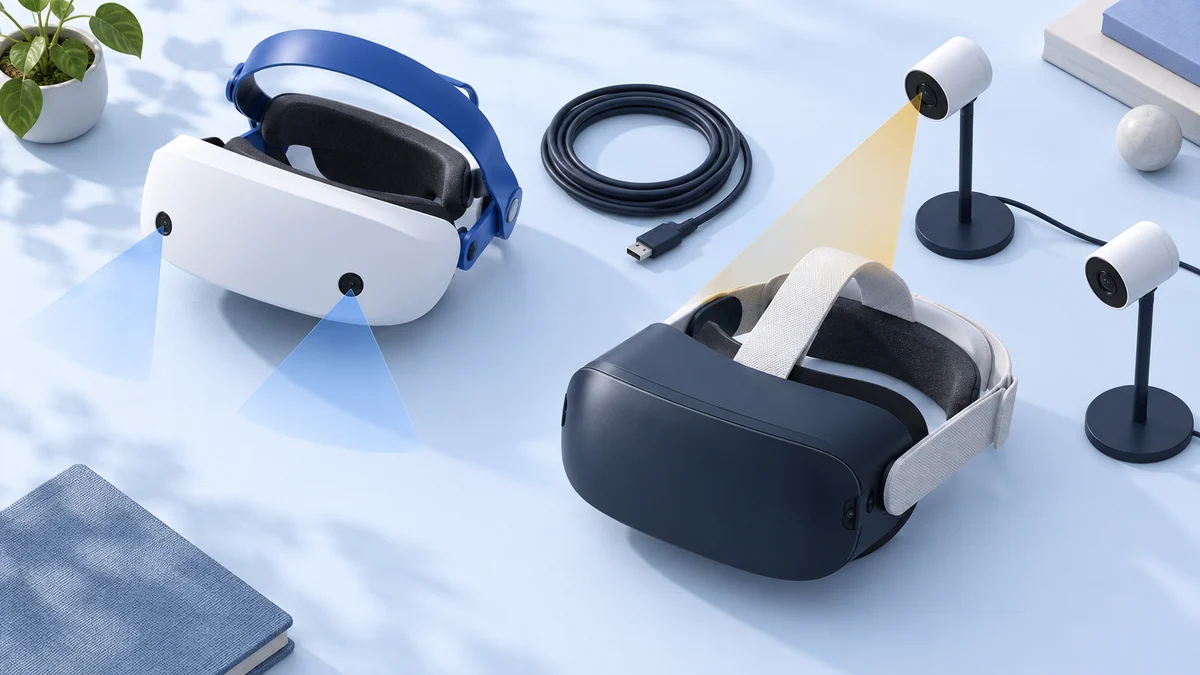
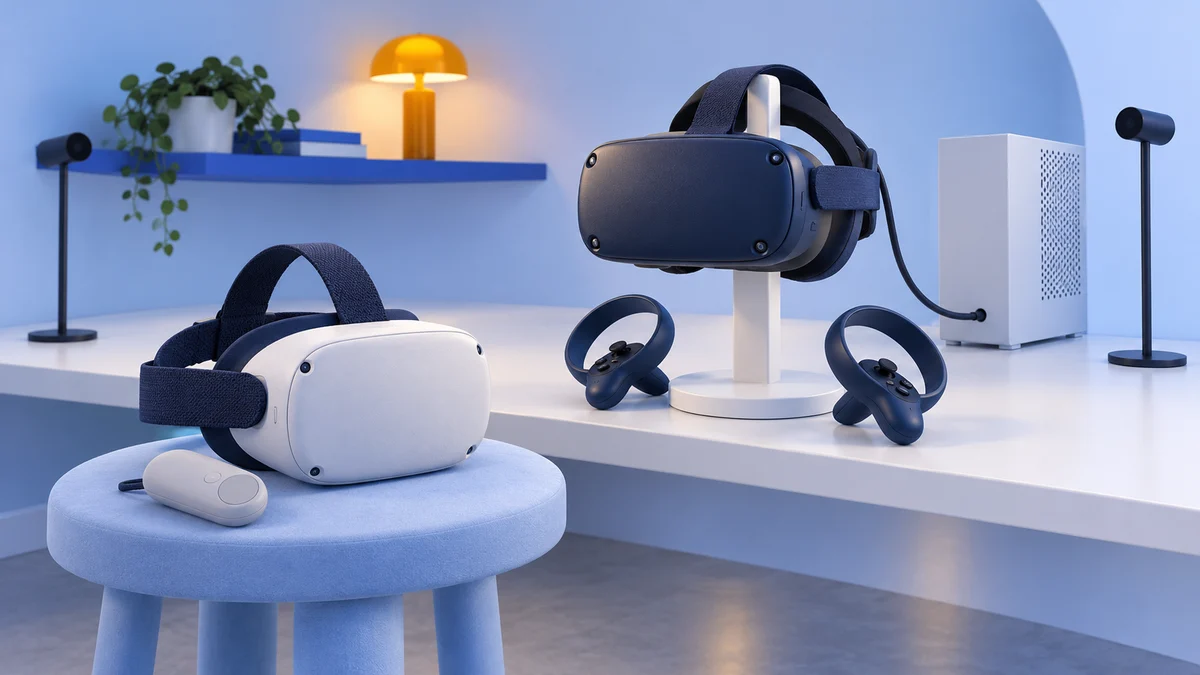
Headset alternatives discussed in this guide

Meta Quest 3S
128 GB configuration
Standalone VRStandalone games with Fresnel lenses.
Check first: Check the app library, optical fit and return policy.
Check price on Amazon Paid link · Amazon
Meta Quest 3
512 GB configuration
Pancake opticsPancake lenses and a higher-resolution display than Quest 3S.
Check first: Compare the complete purchase, including any accessories.
Check price on Amazon Paid link · AmazonPlayStation VR2
Check the exact retailer bundle
PlayStation VRA headset for PS5, with a separate adapter option for PC VR.
Check first: PC use needs the adapter and a compatible DisplayPort setup.
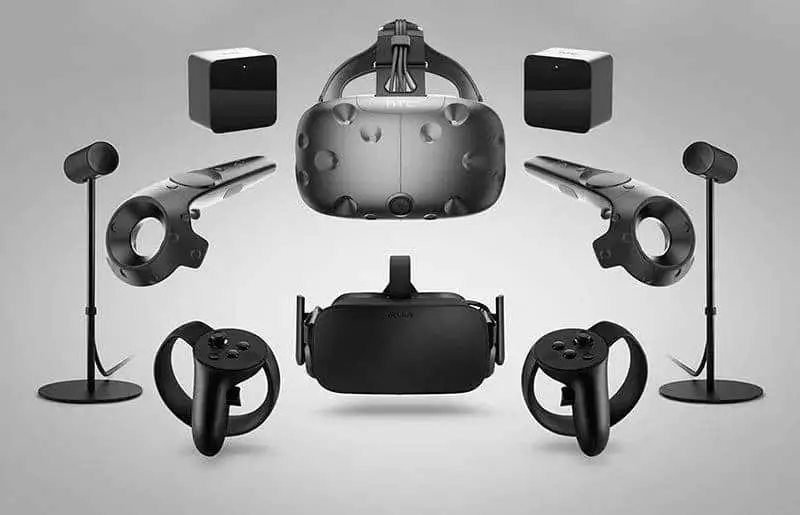
Check price on Amazon Paid link · AmazonChoosing between an original Oculus Rift and PlayStation VR starts with the hardware you already own. The Rift needs a Windows gaming PC; PSVR needs a compatible PlayStation setup and camera. Both are discontinued, so a used headset also needs the right accessories to be useful.
Check the platform requirements and controller choices first, then compare game libraries. Dustin's original verdict remains below, alongside replacement options for a first-time buyer.
Platform status and source notes
Oculus Rift vs. PSVR: status checked 24 September 2026
Still sold? No, neither is made any more. Production of the original Oculus Rift ended in March 2019, and Facebook (now Meta) ended sales of its successor, the Rift S, in 2021. Sony's original PlayStation VR was discontinued in 2024. Both are now used or leftover-stock purchases only. Still usable? Yes. The Rift needs a Windows PC and Meta's PC software; when Facebook dropped the hardware, it said the Rift platform would carry on. The PSVR works on a PS4 or PS4 Pro with a PlayStation Camera, and it runs PS4 VR games on a PS5 with the camera adapter, which Sony stopped giving away free on 26 November 2024. What to consider instead: a Meta Quest 3 or Quest 3S for standalone VR and PC VR, or PlayStation VR2 if you own a PS5. See what to buy instead. The comparison below is Dustin's original hands-on article, with outdated facts corrected.
From Dustin Jermalowicz’s original 2020 review: I owned both headsets and chose the Rift overall. The first-person hardware and game observations below preserve that experience.
For historical scale, Sony had sold 5 million PSVR headsets by the end of 2019, according to the Sony figures cited on Wikipedia. The Rift sold far fewer: Wikipedia gives an estimate of about 547,000 units by July 2019.
I wrote this Oculus Rift vs. PSVR comparison to explain where each of the units I owned worked better for me.
Things to Think About Before Buying a Premium VR Headset
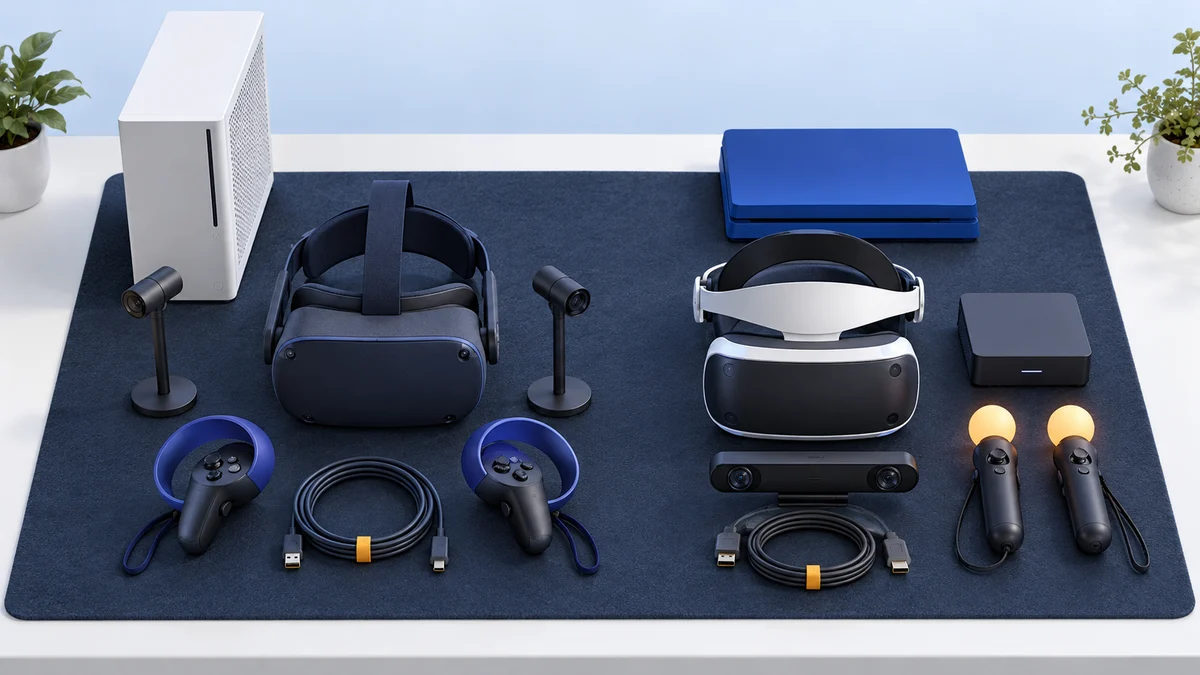
Both headsets rely on another device to run games. Check that platform and the complete tracking kit before judging which headset has better specifications.
| Requirement | Original Oculus Rift | Original PlayStation VR |
|---|---|---|
| Main platform | Windows gaming PC with Meta’s PC software | PS4 or PS4 Pro; supported PS4 VR games on PS5 with an adapter |
| Tracking accessories | Rift sensors and Touch controllers | PlayStation Camera, processor unit and the controllers required by each game |
| PS5 compatibility | Not a PlayStation headset | Requires the PS4 PlayStation Camera and camera adapter |
| Game-library consideration | PC VR software and its headset requirements | Original PSVR games do not carry over to PS VR2 |
| Used-kit decision | Check PC compatibility and every sensor/controller | Check the processor unit, camera, controllers and any needed adapter |
A complete kit that suits your library matters more than the original category score. The following criteria explain that choice in more detail.
Do You Have a PC or a PS4 Console?
The Rift requires a suitable Windows gaming PC. The original PSVR uses a PS4 or PS4 Pro, or a PS5 for supported PS4 VR games with the camera adapter. A headset-only listing does not include the platform that powers it, so confirm both before comparing prices.
For the Rift, Meta’s legacy Rift specifications now list Windows 10 or later and recommend an NVIDIA GTX 1060 or AMD Radeon RX 480 graphics card or better.
Play Space
You can play both the Oculus Rift and PSVR sitting down, but I think the best VR experiences are done when you can move around.
Both headsets support six degrees of freedom (6DOF), but you need room to move around.
Keep this in mind when you’re wanting to set up an area to play.
Controllers
Check what your chosen games require. Rift Touch controllers and PlayStation Move controllers feel and track differently, as Dustin explains in the original comparison below. A used kit must include the appropriate controllers and tracking accessories; the headset alone is not enough for every game.
The Ideal Buyer
These older kits make the most sense to someone who already owns the matching platform and understands the accessory requirements. For a first setup, compare the maintained alternatives below before investing in legacy hardware and missing parts.
Introducing the Oculus Rift and PlayStation VR Headset
The Oculus Rift is the granddaddy of premium VR headsets. The device was designed by Palmer Luckey, who famously founded Oculus, launched a Kickstarter, and sold the company to Facebook for $2 billion in 2014.
The Rift is the first retail headset from Oculus, and it’s been a big success.
In 2019, Oculus replaced it with the Rift S, offering up internal tracking and a few better tweaks. The Rift S was itself discontinued in 2021, as Facebook (now Meta) moved to its Quest headsets.
Rift Pros and Cons
Pros
- High-end headset
- Built-in 3D headphones
- Very comfortable to wear for extended periods
Cons
- Pricey
- Lack of great exclusive content
The PlayStation VR was launched by Sony in October 2016 and became one of the best-selling VR headsets of its generation. Sony discontinued it in 2024.
The headset uses a PS4 or PS4 Pro console to power the games and has seen hundreds of titles released to the PlayStation Store.
The device isn’t as beefy in all specs as the Rift, but it has been impressive in its scope.
PlayStationVR Pros and Cons
Pros
- More economically priced than the competition
- Features Sony’s great IP
- 6DOF capable
Cons
- Controllers aren’t that great
- Tracking isn’t always precise
- Visuals aren’t as good as the Rift or HTC Vive
The pros, cons and category judgments here are Dustin’s original 2020 observations. They describe the hardware and libraries at the time; use the platform-status notes above when evaluating a used kit today.
Hardware
The hardware for both devices compare well, but there are certain ways that each device prevails.
The overall build quality of the Rift is a bit nicer, as it feels comfortable and is well-balanced across your head.
The PSVR also feels good, but there are certain elements such as the back button that clamps the device to your head, which feel a bit cheap.
These two are very close in this area, but I give the edge to the Rift.
Advantage: Rift
Visuals
The Rift has a resolution of 1080 x 1200 per eye coming through an OLED at 90Hz.
The PlayStation VR has a display resolution of 960 x 1080 per eye, which is also on an OLED display at a variable 90Hz-120Hz refresh.
Once again, things are about equal here, but if you’re going on pure specs, the advantage goes to the Rift.
It should be said that graphics will depend heavily on the rig you use to power the games.
You’ll need a good gaming PC with a powerful graphics card to get the most out of your Rift. Similarly, the PS4 Pro has a big boost on performance and is the ideal way to play on your PSVR headset.
Advantage: Rift
Audio
In terms of your audio experience, the Rift blows the PSVR out of the water.
Quality is just about the same on both devices, but the Rift includes over-the-top 3D spatial headphones that attach right to your headset. Conversely, the PSVR ships with some earbuds that are wired and attach to a hub that hangs from the headset.
You really just can’t beat those Rift headphones, and the placement of the jack on the device is much better than the PSVR.
Advantage: Rift
Software
Software is where things start to get interesting. The Oculus Rift uses your PC and has access to the Oculus Store, SteamVR, Viveport, and other stores. The PSVR is stuck with games only on the PlayStation Store or physical discs you can pick up.
Although this seems like a clearcut advantage for the Rift, there’s a big thing going for PSVR: exclusives. Sony has some awesome properties at their disposal, and the exclusives they have for PSVR cannot be found anywhere else.
Of particular note is Astro Bot Rescue Mission, which may be the best VR game I’ve ever played. There are other exclusives also available, including Gran Turismo Sport, Farpoint, and Blood & Truth.
In my eyes, the exclusives give the PlayStation VR the edge here. You can play a vast majority of the games available for Rift on PSVR, but you cannot do it the other way.
Update: PSVR games do not carry over to PS VR2. Sony says PS VR2 cannot play content that requires PS VR, so a PSVR game library stays tied to the original headset.
Advantage: PSVR
Controllers
The controllers for both devices do their jobs, but the advantage here goes to the Oculus Rift.
The Touch controllers are almost an extension of your hands. They’re very sensitive, have rumble, and can conduct even small movement for your hands. There have been times where I’m stuck looking at my hands, amazed at how detailed the finger movement is.
The PSVR uses the old Sony Move controllers, which debuted with the PS3 almost a decade ago.
While these work, they feel clunky. There are also some issues from time to time with tracking, which can be the difference between life and death depending on the game you’re playing. They’re not terrible, but certainly not something that feels as premium as the Touch controllers.
I say that playing with the Touch is like playing with excellent leather gloves on your hands while playing with the Move is like playing with oven mitts on your hands.
Advantage: Rift
Value
In terms of sheer value, it looks like PSVR is the clearcut winner. There are countless bundles available that package the PSVR with games, the controllers, and the camera required to get in on the action.
The Rift itself doesn’t usually come in packages like you get with the PSVR. You do get the camera, headset, and Touch controllers, but the price is usually much higher. This hurts the value proposition a lot, especially considering that many games available for the Rift can also be played on the PSVR.
Neither headset is sold new any more, so value now depends on the used price and on getting every part: Touch controllers and sensors for a Rift; the processor unit, PlayStation Camera and controllers for a PSVR.
Advantage: PSVR
The Big Winner
Original 2020 verdict: Dustin’s recommendation below dates from when both headsets were on sale. Both are now discontinued; the replacement section is the next step for a first-time buyer.
When we break down all of the categories above, the Oculus Rift ends up beating the PlayStation VR.
The device has clear advantages in terms of audio and visual quality as well as the controller, but the PSVR has the advantage when it comes to exclusive games and value proposition.
I say to look at Oculus Rift vs. PSVR like this: Go with the choice that matches your current hardware.
If you have a PlayStation 4, you’re better off going with a PSVR. If you have a PC and no PS4, go with the Rift.
If you have both a PS4 and PC, weigh what’s most important to you. If having the cutting edge graphics and performance matters most, the Rift is the way to go.
If you love Sony’s exclusives and don’t want to break the bank for a headset, then the PSVR is a perfect choice.
I am spoiled in this regard. I have both, and I get the best of both worlds.
Note: this verdict dates from when both headsets were on sale. Both are now discontinued, and a newer headset is the better buy for most people. See the options below.
What to buy instead of a Rift or PSVR
The same rule applies: match the headset to the hardware you own.
| Headset | Works with | Price (checked 24 September 2026) |
|---|---|---|
| Meta Quest 3S | Standalone; Windows PC via Meta Horizon Link | From $349.99 (128 GB) |
| Meta Quest 3 | Standalone; Windows PC via Meta Horizon Link | $599.99 (512 GB) |
| PlayStation VR2 | PS5; PC with the $59.99 PS VR2 PC adapter | $399 US list; £399.99 UK |
Meta raised Quest prices on 19 April 2026, and the figures above match its comparison page. As of 18 September 2026, VR.org reported that PS VR2 was out of stock new at PlayStation Direct in the US but in stock in the UK. On PC, Sony’s PS VR2 PC adapter needs a DisplayPort 1.4 output and Bluetooth 4.0, and it drops HDR, eye tracking, headset feedback, adaptive triggers and controller haptic feedback.
For more background, see our Oculus Rift review, our PlayStation VR review and our Quest 3 vs. Quest 3S comparison.
Oculus Rift vs. PSVR FAQ
Does the original PSVR work on a PS5?
Yes, for PS4 VR games played through backward compatibility, using the PlayStation Camera adapter. Sony stopped giving the adapter away free on 26 November 2024, and no PS5 games support the original headset, according to Wikipedia.
Can I still use an Oculus Rift?
Yes, with a Windows PC and Meta's PC software. When Facebook (now Meta) announced the end of Rift hardware in 2020, it said the Rift platform would continue. We found no official end-of-support date.
Research behind this guide
Check the linked specifications and support documents, or read how we research. Original review experience stays attributed to its author.
View 11 sources
- Oculus Rift CV1 (Wikipedia)
- Oculus Rift (Wikipedia)
- Reality Labs (Wikipedia)
- Facebook to discontinue Rift product line in 2021 (Road to VR)
- PlayStation VR (Wikipedia)
- PlayStation VR2 (PlayStation)
- PlayStation VR2 players can access games on PC with adapter starting on August 7 (PlayStation Blog)
- PS VR2 out of stock in the US (VR.org)
- Compare Meta Quest headsets (Meta)
- An update on Meta Quest pricing (Meta)
- Meta Horizon Link PC requirements (Meta Quest Help Center)
Explore the related guides in VR comparisons.