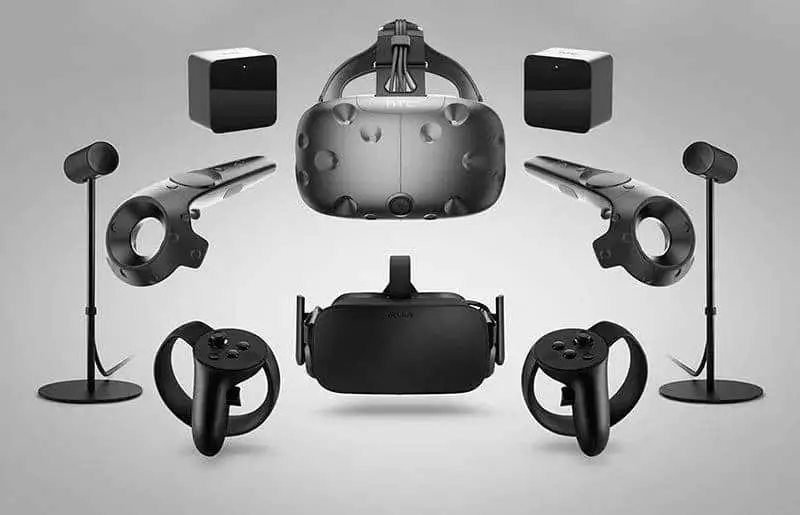
PSVR vs HTC Vive – Which One Is Better?
We may earn a commission when you buy through links on this page. As an Amazon Associate I earn from qualifying purchases. How this works
John chose the HTC Vive in the original 2020 comparison for tracking and immersion; PSVR appealed to PlayStation owners and offered better comfort without added accessories. Both are now discontinued. An existing owner should check the PC or console, tracking hardware and game library first. A first-time buyer should compare replacement options before buying a used kit, especially if base stations, controllers or the PlayStation Camera are missing.
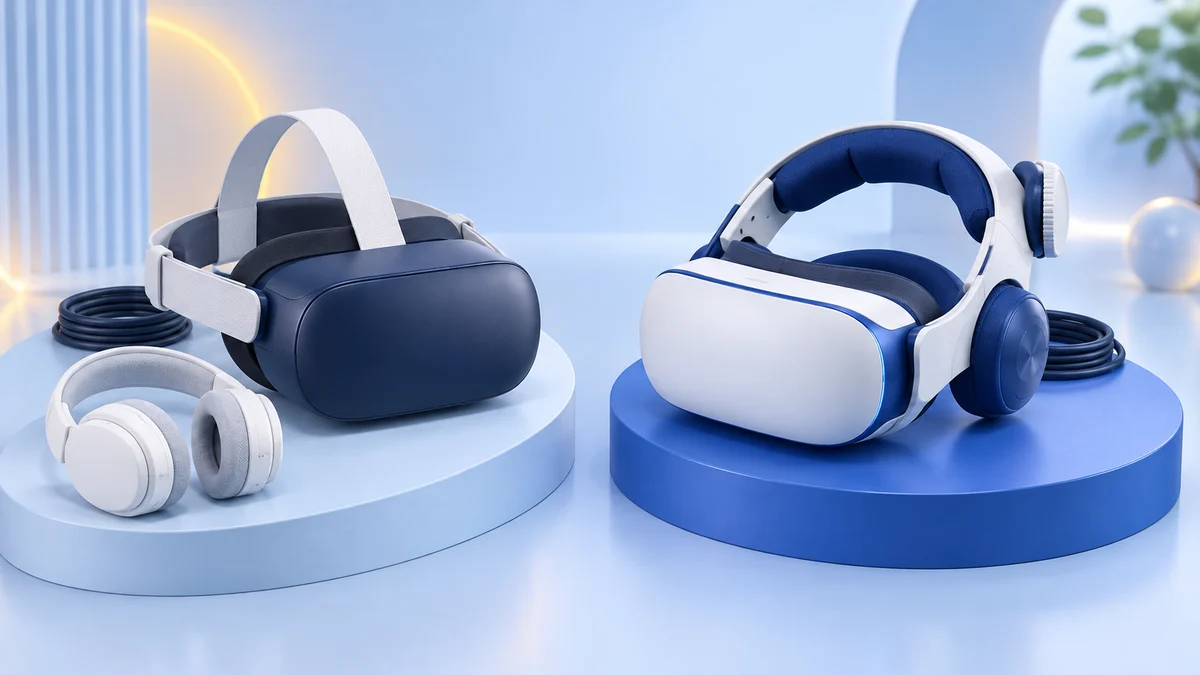
Headset alternatives discussed in this guide

Meta Quest 3S
128 GB configuration
Standalone VRStandalone games with Fresnel lenses.
Check first: Check the app library, optical fit and return policy.
Check price on Amazon Paid link · AmazonPlayStation VR2
Check the exact retailer bundle
PlayStation VRA headset for PS5, with a separate adapter option for PC VR.
Check first: PC use needs the adapter and a compatible DisplayPort setup.
Check price on Amazon Paid link · AmazonHTC VIVE Focus Vision
Check the exact retailer bundle
VIVE headsetA standalone and PC VR option discussed in this guide.
Check first: Check the required PC connection and accessory setup.
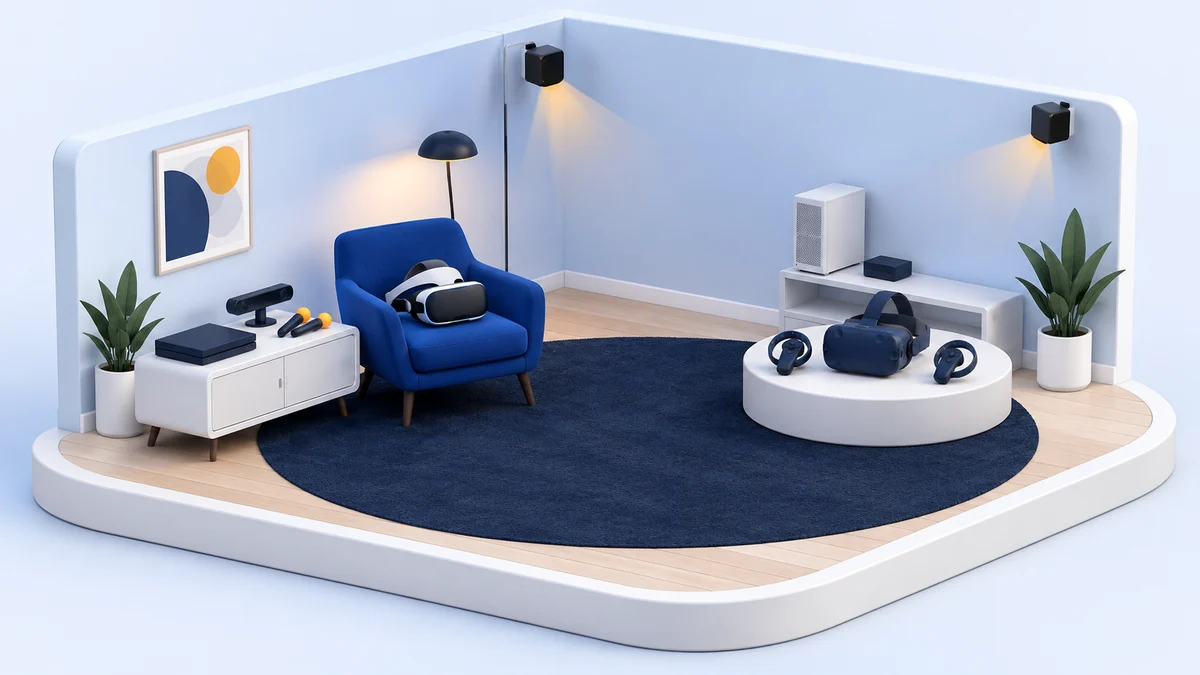
Check price on Amazon Paid link · AmazonThe original PSVR and HTC Vive need more than a headset to get started. PSVR uses a PlayStation and camera; Vive uses a gaming PC, link box and base stations. Both are older, discontinued models, so missing accessories can turn a cheap listing into a difficult first setup.
Compare the platform requirements, then check connections and play space and game libraries. John's original verdict explains the experience differences. For a new purchase, see the alternatives.
Platform status and source notes
PSVR vs. HTC Vive: status checked 24 September 2026
Still sold? No. Sony's original PlayStation VR was discontinued in 2024, and the original HTC Vive (launched in April 2016) is no longer part of HTC's current lineup. Both are now used or leftover-stock purchases. Still usable? Yes. HTC still hosts support pages for the original Vive, which runs through SteamVR on a Windows PC. The PSVR works on a PS4, and Sony says it also runs supported PS VR games on a PS5 with the PlayStation Camera for PS4 and a camera adaptor. What to consider instead: a Meta Quest 3 or 3S for standalone and PC VR, PlayStation VR2 if you own a PS5, or one of HTC's newer headsets. See what to buy instead. The comparison below is John's original article, with outdated facts corrected.
From John’s original 2020 comparison: I rated the HTC Vive (historical Amazon listing) higher for its tracking and immersion. The category judgments below describe that historical comparison; they do not establish whether a used kit is a suitable first purchase now.
Things to Consider Before Buying a VR Headset
The platform you own sets the total setup cost. Then check that the kit includes the parts needed for the games you want.
| Requirement | Original PSVR | Original HTC Vive |
|---|---|---|
| What powers it | PS4; supported original PS VR games on PS5 with a camera adapter | Windows gaming PC running SteamVR |
| Connection hardware | Processor unit and headset connections to the console and TV | Link box connecting the PC and headset |
| Tracking | PlayStation Camera; controllers depend on the game | External base stations and tracked Vive controllers |
| Play-area planning | Keep movement within the camera’s view | Plan base-station placement and clear space for room-scale games |
| Library check | Check original PSVR game compatibility | Check the PC game’s VR and controller requirements |
The following sections retain John’s original 2020 comparison. Its winner describes those systems at the time; the platform notes above explain their status today.
Do You Already Own a PlayStation 4 or Gaming PC?
The original HTC Vive uses a gaming PC. The original PSVR uses a PS4, or a PS5 for supported PS4 VR games with the required PlayStation Camera and adapter.
If you own a gaming PC but do not own a PlayStation 4, then you’ll save a considerable amount of money going with the HTC over the PSVR.
Of course, the reverse is true as well. If you own a PlayStation but not a gaming PC, the PSVR is less expensive overall.
For reference, HTC’s minimum PC requirements for the Vive are an Intel Core i5-4590 or AMD FX 8350, an NVIDIA GeForce GTX 970 or AMD Radeon R9 290, 4 GB of RAM, an HDMI 1.4 or DisplayPort 1.2 output and a USB 2.0 port. On the PlayStation side, a PS5 also works: Sony’s PS VR setup page says you need the PlayStation Camera for PS4 and a PlayStation Camera adaptor, and it only runs supported PS VR games.
Are There Any Specific Apps or Games You Want to Play?
While there are some games/apps available for both the Vive and PlayStation VR, there are also several which are exclusive to PC or PlayStation.
If you are dying to play Farpoint or Astro Bot Rescue Mission, you’ll need to go with the PSVR. Before you buy, look through the PlayStation VR library (here), HTC Viveport (here), and SteamVR library (here) to see if any of your favorite games are exclusive to one system or the other.
Let’s Get Ready To Rumble! HTC Vive vs PSVR
The HTC Vive and PlayStation VR were early consumer VR systems. The following category winners preserve John’s original 2020 comparison of their setup and experience. Read them alongside the dated platform notes above.
The criteria I’ll be using are…
- Setup
- Graphics Display
- Audio Experience
- Comfort
- Motion Tracking
- App Library
- Immersion Experience
Compare the setup first, then the display, tracking and games.
Setup
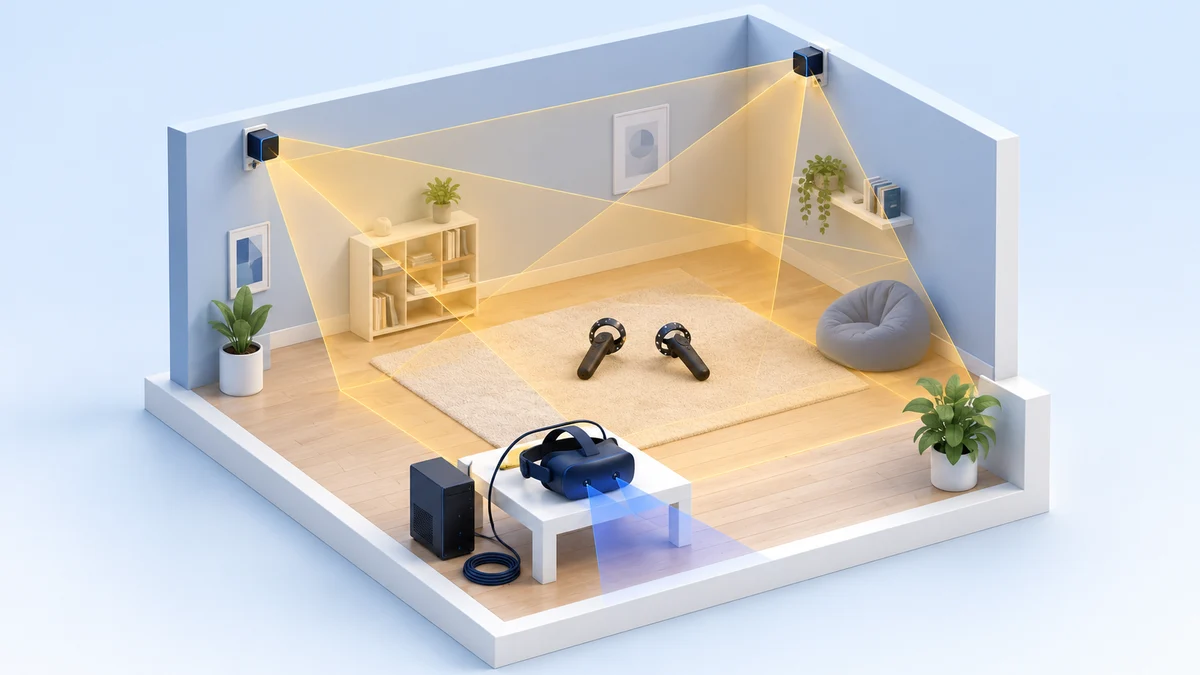
Both systems require a bit of setup. For the HTC Vive, you have to connect the Linkbox to both your headset and computer and then install base station sensors. The base stations can be set on a high shelf or attached to the wall. Install some software, and you’re set.
The PSVR requires you to connect your PS4, headset, and TV to the processing unit. Then connect a camera and place it on top of your TV. Next, perform some basic configuration steps, and you’re good to go.
The setup is pretty similar between the two systems except for two important differences.
- One uses a computer and the other a PS4. If you don’t already have a decent gaming computer or a PS4, you have to purchase one.
- They have different sized gaming areas. The PSVR requires a 9’ x 6’ area and can use up to 10’ x 10’. The HTC Vive requires a 6’6” x 5’ (2 m x 1.5 m) area and, according to HTC’s play-area guide, supports movement within a diagonal of up to 5 m (16’4”), for example about 11’5” x 11’5” (3.5 m x 3.5 m). Whereas the PSVR works best with cockpit games or games where you don’t move too much, the HTC Vive can do cockpit games or games with a lot of movement. Games with a lot of movement require more open space but give a more immersive experience.
There is one other setup feature to note. The Vive has an optional wireless adaptor you can purchase separately. If you are willing to spend some extra cash, you can untether yourself. HTC’s Wireless Adapter support pages still include setup steps for the original Vive.
This is a game-changer. For most people, once they go wireless, they never go back.
Winner:
HTC Vive – This is a close one. Both systems require a similar amount of setup. Both require you to have a computing device (computer or PS4) and both require a decent sized gaming area. You’ll probably have a winner in this category based on whether you own a computer or PS4. For me, however, the ability to go wireless puts HTC ahead.
Graphics Display
The Vive and PSVR headsets both have a decent visual display, though there are some significant differences. The Vive has a broader field of view (110-degrees compares to the PSVR’s 100-degrees). This does affect the immersive experience, but only slightly. The PSVR has a faster refresh rate (120 Hz vs. 90 Hz), though the difference is barely noticeable.
The HTC has a better resolution, two OLED screens with a combined resolution of 2,160 x 1,200 pixels. PSVR has a single screen with a 1,920 x 1,080-pixel resolution. Resolution, however, isn’t everything.
What powers the graphics plays a significant role. Simply put, the PlayStation hardware can’t compete with the current PC graphics cards. This allows the HTC Vive games to have much better graphics.
The one noticeable edge the PSVR has is with the screen door effect. The screen door effect is the term used to describe how images in VR systems tend to look like you are looking through a screen door. The PSVR has much less of a screen door effect. For some, this makes a big difference. For many, they stop noticing the screen door effect soon after they start playing a game.
Winner:
HTC Vive – Unless the screen door effect really bothers you, the higher-quality graphics of the HTC Vive give an excellent image. This makes the VR experience that much more realistic.
Audio Experience
Neither headset has built-in headphones. However, with a good set of headphones, either gives beautiful 3D audio. There is a difference, though.
The HTC Vive has an audio accessory called the HTC Vive Deluxe Audio Strap which attaches to the headset and gives you built-in headphones. It gets better, however. The audio strap also has additional padding and a more ergonomic design making the HTC much more comfortable.
Winner:
HTC Vive – Out of the box, this would be a tie. However, the option of getting the deluxe audio strap nudges the Vive over the finish line first.
Comfort
Early on the HTC Vive was much heavier and the PSVR was much more comfortable. However, later models of the Vive have trimmed off a considerable amount of weight and made it more comfortable.
For most, the PSVR feels more comfortable due to better weight distribution. However, some people have complained that the PlayStation VR doesn’t feel like it fits right on their head. The HTC Vive tends to rest more weight on your forehead, which can get uncomfortable after extended use.
The Vive does have one area where it out-shines the PSVR in this category. The goggles tend to fit better over your face and give a better seal, preventing outside light from getting in. Also, as I mentioned in the audio category, if you get the deluxe audio strap, the Vive is much more comfortable.
Winner:
PSVR – Its lightweight, balanced design makes it more comfortable for extended play. If, however, you get the HTC audio strap, this category becomes a tie.
Motion Tracking
This is where the HTC Vive really shines. Simply put, when this article was written there was no better motion tracking system on the market except for the HTC Vive Pro.
The Vive has room-scale motion tracking that can cover a gaming area of about 11’5” x 11’5” (3.5 m x 3.5 m), according to HTC. This allows you to move physically around your virtual environment, greatly improving the immersive experience.
The Vive’s tracking is nearly flawless. Also, the HTC hand-controllers are well-tracked and easy to use.
The PSVR has decent tracking so long as you don’t move too much. The system is designed more for cockpit games or games with limited movement. The PlayStation Move-controllers have some issues, though.
First, they are the same motion controllers that came out with the PS3. They are old tech.
Second, they are tracked by a camera on the TV in front of you, which sees the light from the controllers. If you move a controller out of view of the camera (maybe behind you), it loses tracking.
Also, if your room has a lot of light, it can affect the PlayStation’s ability to track the controllers.
Winner:
HTC Vive – The Vive wins this category hands-down. Its motion tracking is superior. Its hand-controller tracking is superior. It allows you to move around the room much better than the PSVR system.
Note: The Vive Pro line is no longer on sale either. HTC's Vive Pro 2 page says the headset is no longer available and points buyers to the Vive Focus Vision, which uses inside-out tracking and needs no base stations.
App Library
This is a tricky category to judge.
If I only go by the number of titles available for each system, the Vive would win. However, the numbers start to get closer when you only count apps that are popular titles.
Also, you may have some specific games/apps you like. If that game/app is only available on one system or another, that will nudge you towards that system.
Winner:
You Decide – You can find great games and apps on both systems. Check out the libraries for both system, and you decide which has more apps you like.
Immersion Experience
I know this sounds redundant, but virtual reality is all about creating a virtual reality. The more you can maintain the illusion of that reality, the better the VR experience. You can shatter any virtual reality with bad graphics or audio, outside light and sound, awkward movements, or discomfort.
The HTC Vive does an excellent job of visually and audibly creating an immersive environment. Add to that its room-scale motion tracking (up to about 11’5” x 11’5”) and you really start to feel like you are in the world the app is creating.
The PSVR starts to get there, but the limited movement continually reminds you it’s just a game. Add to it the lesser graphics, and it just can’t come close to matching the Vive.
Winner:
HTC Vive – With better graphics and far-superior motion tracking, the Vive easily wins this category.
A Side Point
In this comparison, I haven’t addressed pricing, and I did that intentionally.
I want to let you know which system is better.
You can decide if it’s worth spending more to get a better system. Also, while the PSVR is definitely less expensive, you have to consider the cost of apps. PSVR games can be more expensive than Vive games, and you could quickly make up the difference in price depending on the apps you purchase.
So, which system is best?
The Winner
Original 2020 verdict: John preferred the Vive for immersion. Both products are now discontinued, so this verdict describes their original comparison. A first-time buyer should use the replacement section below.
The HTC Vive – The Vive gives a more immersive experience, and that’s what VR is all about.
The historical HTC Vive listing is kept for reference here and the original PlayStation VR listing is here.
Both of those products are now discontinued, so any listing you find is likely to be leftover or used stock. Check that the seller includes everything you need: base stations and controllers for the Vive, or the PlayStation Camera for the PSVR.
What to buy instead of a PSVR or HTC Vive
If you are buying new, these are the closest current options we found. Prices are US list prices, checked 24 September 2026.
| If you have… | Consider | Why |
|---|---|---|
| A PS5 | PlayStation VR2 (also on Amazon; $399 list) | Sony’s current headset. It needs a PS5, can’t play original PS VR games, and works with PC VR games on Steam through Sony’s PC adapter. |
| No console or gaming PC, or a Windows PC | Meta Quest 3S (also on Amazon; from $349.99) or Quest 3 ($599.99) | Standalone headsets that can also play PC VR games through Meta Horizon Link on Windows 10 or 11. |
| A budget for a premium headset | HTC Vive Focus Vision (also on Amazon; $999) | HTC’s current Vive: 2448 x 2448 pixels per eye, standalone or PC VR, inside-out tracking. |
| A Steam library | Valve Steam Frame (from $1,059) | Valve’s standalone headset, which can also stream PC VR games. Valve sells it through a reservation queue and began sending order emails on 18 September 2026. |
Note on stock: VR.org reported on 18 September 2026 that PS VR2 was showing as unavailable on Sony’s US store and at major US retailers, while Sony’s UK store still had it in stock.
For more comparisons, see our VR comparisons and the Meta Quest 3 vs Quest 3S guide.
PSVR vs. HTC Vive FAQ
Can you still buy a PSVR or an HTC Vive new?
Not from the manufacturers. Sony discontinued the original PlayStation VR in 2024, and HTC's product pages no longer list the original Vive. Only leftover and used units remain.
Does the original PSVR work on a PS5?
Yes, for supported PS VR games. Sony says you need the PlayStation Camera for PS4 (CUH-ZEY1 or CUH-ZEY2) and a PlayStation Camera adaptor. Sony used to send the adaptor free to PS VR owners, but that offer ended on 26 November 2024, so you may now need to buy one from a third-party seller.
Can PlayStation VR2 play original PSVR games?
No. Sony states that PS VR2 is not compatible with the PS4 and can't play content that requires the original PS VR.
Does the original HTC Vive still work?
Yes. It connects to a Windows PC and runs through SteamVR, and HTC still hosts setup and troubleshooting pages for it.
Research behind this guide
Check the linked specifications and support documents, or read how we research. Original review experience stays attributed to its author.
View 17 sources
- HTC Vive (Wikipedia)
- PlayStation VR (Wikipedia)
- PS VR: set up with PS5 (PlayStation)
- Astro Bot Rescue Mission (Wikipedia)
- VIVE product lineup (HTC)
- VIVE support (HTC)
- VIVE system requirements (HTC)
- Planning your play area (HTC VIVE support)
- VIVE Wireless Adapter support (HTC)
- VIVE Pro 2 (HTC)
- VIVE Focus Vision specs (HTC)
- PlayStation VR2 (PlayStation)
- PS VR2 out of stock in the US (VR.org)
- Compare Meta Quest headsets (Meta)
- Meta Horizon Link PC requirements (Meta Quest Help Center)
- Steam Frame (Wikipedia)
- Steam Frame reservations (Steam)
Explore the related guides in VR comparisons.